Second Year Spotlight: Cara Tallo
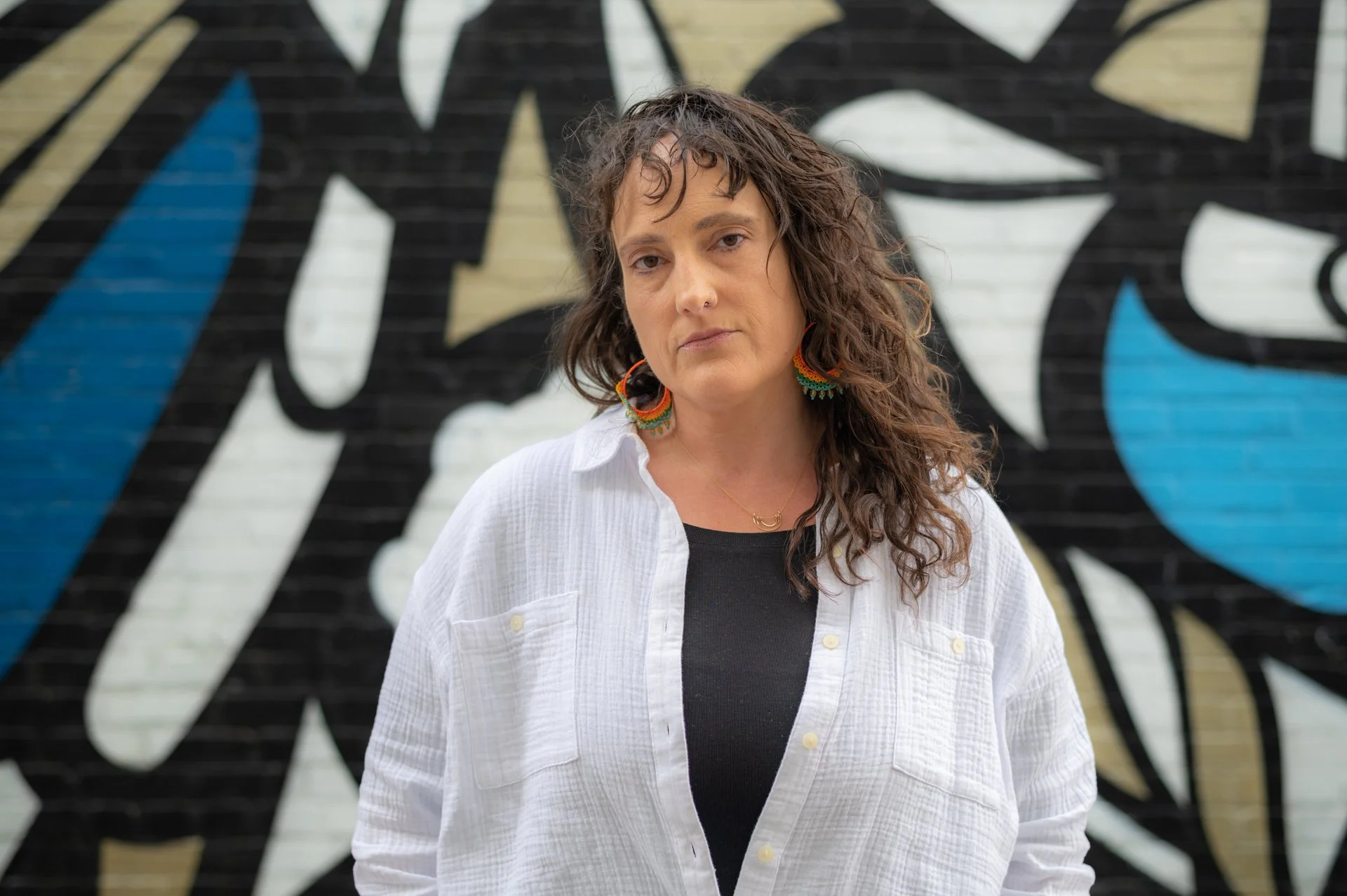
Cara Tallo is a second-year student who dabbles across genres, particularly enjoying non-fiction and memoir.
We interviewed her to learn more about her thesis, a narrative non-fiction project about eating disorders and bigger bodies in the age of Ozempic.
Interview By: Hannah Cornell (EIC)
Café MFA: Introduce yourself. Who are you and what do you like to write?
Cara Tallo: I'm a recovering broadcast journalist who enjoys writing non-fiction/memoir, fiction and, if pressed, poetry.
Café MFA: What is your thesis about?
Cara: It's a narrative non-fiction project about eating disorders and bigger bodies in the age of Ozempic. I weave my personal story of eating disorder diagnosis in with a broader exploration of our cultural tendency to boil complex issues and individuals down to a binary with moral implications. This modern framework, where "typical" is normal and desired and "atypical" is an aberration to be avoided, has resulted in damaging preconceptions about size and weight that directly impact the quality of life of, and access to care for, people in bigger bodies.
Café MFA: Who is on your advisory board for the project? Why did you select them?
Cara: Rachel Louise Snyder, obviously - she's the Nonfiction Guru! And David Keplinger, because he makes my soul sing.
Café MFA: How did the idea for your thesis come about?
Cara: I graduated from my eating disorder treatment program in the fall of 2020, and ever since then I'd been recording small scraps of my journey here and there. I conceiving of this work as an actual book about three or four years ago, but I knew I'd need deadlines and accountability to ever have a hope of finishing. Hence, the in-person MFA program!
Café MFA: What has been your biggest challenge with your thesis thus far?
Cara: Both elevating the personal narrative portions to an actual story rather than a journal entry, and thoughtfully integrating the researched portions into the narrative. Such a bear.
Café MFA: What has been your biggest success thus far?
Cara: I was able to come the closest I've been to successful research/narrative integration in the revised version of my thesis, and I'm really pleased about that.
Café MFA: What has this project taught you?
Cara: It takes the time it takes. I once worked on a long-form narrative podcast and found it horrifying that projects could drag out for a year, sometimes longer. From my time in the newsroom, I was programmed to deliver on deadline. I now fully believe that when it comes to creative works (particularly personal stories) grace around deadlines is a pre-requisite for success.
Café MFA: What advice would you give first-year students who are planning their thesis work?
Cara: It's great to come in with a big idea that you're ready to dive in and construct for your thesis. But this can be limiting, and can lead to burnout on your project/topic before you're even in your thesis semester. Two years is an undeniably tight timeline for an MFA, so you need to be intentional about creating space to explore. Some of the work I'm most excited about continuing / getting published as I move on from AU is work completely unrelated to my thesis (in Fiction and Poetry). This is part of the gift of the AU cirricculum -- the ability to explore other genres and crafts even as you pursue your chosen concentration. Don't miss this opportunity to take the risks, try new things, and grow!
I’ve been in several courses with Cara and seen her writing evolve surrounding this topic from being told through a young adult narrative in YA Literature with Patricia Park, to micro pieces about the body in Kyle Dargan’s Micro-as-Matrix course, to poems about struggling with the self in David Keplinger’s Advanced Poetry Workshop. If Cara demonstrates anything about the nature of writing and what being in an MFA program is like, its that your message - the thing you seek to share with the world - can be captured and explored through so many different forms of writing. As Cara noted, exploration is a beautiful part of being in a program like this. It gives a writer space to experiment with new things and really find that thing that makes their work sing.
Cara was also willing to share some of her work with us! See an excerpt of her thesis below:
“The Bugs Inside Us”
“In the nearly one hundred twenty five years since Wilbur Olin Atwater published his calorie calculations, we’ve learned a lot. We now understand that the type of food we’re consuming impacts how it is absorbed by the body. Some foods, like the outer shell of corn and quinoa, have evolved to evade digestion. The way a food is cooked — whether it’s steamed and pureed, or broiled over an open flame and sliced — impacts how it’s digested. The way a food is presented can also play a role in how its nutrients are absorbed. As far back as 1977, one study noted diminished iron absorption in participants consuming an visually unappetizing meal, leading to the takeaway: “This is probably the first study in which it has been shown that factors such as consistency and/or appearance affect the absorption of a nutrient.” Many other studies have since reached the same conclusion. So while cranking out rough calorie calculations based on Atwater’s 4/4/9 formula tells us something about the biological characteristics of given food groups (proteins, carbohydrates, fats) it provides little to no insight into how individual bodies will process these foods. Perhaps the biggest discovery about how bodies use energy from food comes from research in the past 20 years on the gut microbiome— the collection of microscopic bacteria that live in our intestines and help us to process food. A body’s microbiome starts forming at birth, fed by bacteria from the mom’s birth canal, and then from her breastmilk. By 2 or 3 years old, a human’s core microbiome is pretty much set. After that, it evolves constantly, based not only inherited traits, but diet and lifestyle. Kids growing up on a farm in the 1800’s would have been exposed to a variety of bacteria — through farm and domesticated animals, contact with the soil, consumption of fresh produce — all of which influenced the evolving composition of their microbiome and consequently how their bodies processed food and absorbed energy. Today’s children live a more sanitized environment (often literally, with bottles of Purell bouncing from their backpacks), and generally spend less time in nature with reduced access to fresh, whole foods. All of these factors make for a less-diverse gut microbiome, which can upset the balance of how the body absorbs nutrients. That delicate microbial balance can also be upset by lifestyle changes — temporary factors like stress or travel, and more lasting forces like trauma or emigration. With the understanding that the type and amount of bacteria in the gut influences how food is absorbed as energy, researcher Peter Turnbaugh led a 2006 study in the journal Nature compared the guts of lean and obese mice (i.e. mice that were bigger than their lean siblings despite consuming less food). Turnbaugh found that the obese mice a much higher level of a particular kind of bacteria that caused them to extract more energy (read: calories) from the food they ate, as compared to their lean counterparts. In fact, the obese mice were consuming less food than the lean mice, but still significantly larger. In the twenty intervening years, researchers have gathered piles of new data from animals and humans confirming that our unique microbiome — in combination with genetic and metabolic tendencies, the type of food, how it’s prepared, how it looks — plays a pivotal role in the amount of calories we absorb from food. This doesn’t negate Atwater’s research; his findings regarding the energy absorbed from food by a graduate student in his life-size bomb calorimeter are valid, for that one individual. What Atwater missed, that technology in the twenty first century has helped us to realize, is that every single body extracts a different amount of energy from the same amount and type of food based on a number of factors. All of this is to say: now we know that two individuals can consume the same food, in the same amount, prepared in the same way and consume two completely different amounts of calories based on their unique genetic tendencies and microbiome composition. Did you get that? You and I can both eat a banana — same weight and ripeness — I may absorb 100 calories from that banana, while you only absorb 80. Neither of us is doing anything ‘wrong’ or ‘right’ to prompt that difference in absorption. We are just existing, and our bodies are doing what they do to keep us alive.”
You can find Cara on Instagram @caratallo and at caratallo.com